

 by
by 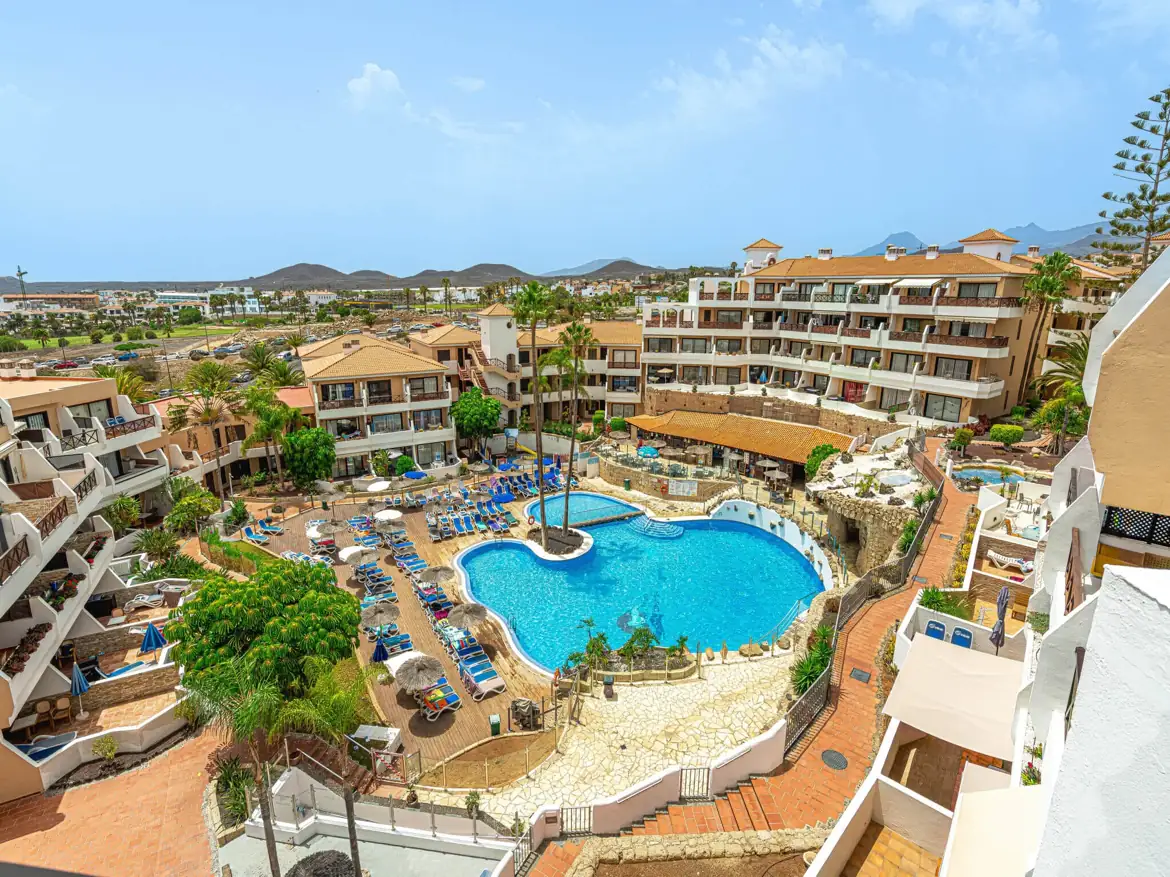
The 4 Options for Parque Albatros: Which one is Best for the Majority of Owners?
Date: November 4, 2025
1. Introduction: What Is Really Happening?
The extraordinary owners’ meeting (JGE) is approaching, scheduled for November 29th. As owners at Parque Albatros, we have received various pieces of legal information that contradict each other. On one side stands the majority of owners, who are successfully renting our apartments individually (VV). On the other side is the committee’s proposal, which claims this practice is illegal and suggests transitioning to a central license.
The aim of this article is to impartially summarize the facts, compare these conflicting legal opinions, and look at which option best protects the interests of all owners—both those who rent out and those who live here permanently.
2. The Clash of Legal Opinions: Are Our VVs Legal?
This is the core of the entire discussion. The situation is complex, but the facts are as follows:
Viewpoint A (The President’s Letter): “VVs are Illegal”
This opinion relies on the old principle of “unified management” (Unidad de Explotación) and a new regional court ruling (TSJC from July 2025). It claims that any individual VV license is invalid because a central license once existed in the complex.
Viewpoint B (Individual Owners): “VVs are Legal”
This opinion relies on two stronger legal arguments that the president’s letter tactically ignores:
- Hierarchy of Courts: An older (2019), but hierarchically higher ruling from the Spanish Supreme Court states that a general ban on VVs in tourist zones is unconstitutional.
- Invalidity of the MGM License: The old MGM license is most likely legally irrelevant and inactive because MGM no longer owns or manages the majority of apartments. If the license is invalid, the president’s entire argument collapses.
Who is right?
Although the president’s letter highlights a legal risk, it relies on a regional ruling that is currently being appealed to the Supreme Court. Conversely, the arguments in favor of VVs are supported by the Spanish Supreme Court and by the factual situation (the invalidity of the MGM license).
3. The Four Options for Parque Albatros: Different Paths, Different Outcomes
At the upcoming meeting, owners will decide how to move forward. Below are the four main options currently being discussed.
OPTION 1: Official Approval of Individual VVs (The “Pro-VV” Model)
Description: The Community ignores the old, invalid MGM license and uses new laws (like Decree 1/2025, cited in the original legal opinion) to approve individual VV rentals by majority vote.
✅ Benefits:
- Owners retain 100% control over their property and income.
- No restrictions for residents or non-renting owners.
⚠️ Responsibilities and Risks:
- Each owner remains responsible for their own license, taxes, and guests (as before).
- Some legal risk remains if the Supreme Court later upholds the regional Waikiki ruling, although this is less likely given its previous decisions.
OPTION 2: Transferring the License to the Community (The President’s Proposal)
Description: The official proposal from the committee. The old MGM license is legally transferred to the Community of Owners, which becomes the central operator.
✅ Benefits:
- According to the committee, this gives 100% protection from sanctions.
- Ensures professional services: a 24-hour reception , a unified cleaning team, a lifeguard at the pool who maintains order.
- In case of good management, it could provide a stable, hassle-free source of income. (For example, at the nearby WYNDHAM resort, the central operator pays owners a guaranteed 5% return based on the property value and renovates the apartments to meet its operational standards.)
⚠️ Responsibilities and Risks:
- The end of individual VVs: This model legally excludes individual rentals. Owners lose control of guests, income, and management.
- If an owner becomes dissatisfied with the quality of services, income levels, or management conditions, they will not be able to change the operator, as the system would be mandatory for the entire complex.
- Bureaucracy and Costs: The Community becomes a business entity with all responsibilities (employees, taxes, insurance).
- Legal Uncertainty: The entire plan depends on whether the MGM license is still valid and transferable.
OPTION 3: Transition to a “Residential” Regime (The End of Tourism)
Description: The Community requests permanent reclassification into a purely residential building.
✅ Benefits:
- Provides legal certainty for those living here long-term ( long-term living).
⚠️ Responsibilities and Risks:
- This change is irreversible.
- All tourist rentals (VV and central) would be permanently banned.
- The investment value of the properties would dramatically decrease.
OPTION 4: Hybrid Community License
Description:
An additional hybrid proposal has been presented. The Community would reactivate a shared tourist license, under which participating owners would be integrated while maintaining independent management of their properties with legal protection.
Key Points:
- Participating owners are covered by the Community’s shared license.
- Each owner maintains private and independent management of their rentals.
- Only participating owners pay for required services (reception, police registration).
- Non-participating owners pay no additional costs.
✅ Benefits:
- Represents a compromise between the individual and central models.
- Preserves private management and financial independence for participating owners.
- Does not financially burden owners who do not rent.
⚠️ Responsibilities and Risks:
- Depends on the legal validity and transferability of the old MGM license.
- Requires a detailed legal implementation plan and an official legal opinion.
- Clear legal guarantees must be provided to owners:
- full independence in rental management,
- the Community is not liable for owners’ taxes or operational obligations,
- equal legal protection for all participants without risking their freedom to manage their property.
4. Summary: Does it Make Sense to Wait?
The president argues that there is no time to wait. However, the current situation has already lasted three years, and the majority of owners wish to continue with individual VV rentals, which are supported by Spanish Supreme Court rulings.
Since a key amendment to the rental law is scheduled for debate within the next six months, it seems wiser to wait for the updated legal framework and only then make a definitive decision.
At this stage, the most reasonable interim solution appears to be Option 1 (Legalization of the Current Situation), while Option 4 (Hybrid Community License) could serve as a potential future compromise, provided that clear legal guarantees are offered to all owners.
This article is purely informational and is published on AlbatrosTenerife.com to help owners better understand the situation and the options that will affect the future of the Parque Albatros resort.


 English
 Czech
Czech Polish
 Hungarian
 Italian
 Spanish
 Russian